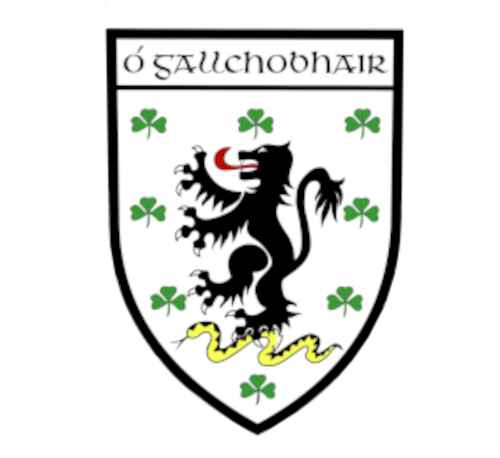
Gallagher Surname Meaning & Origins – Ó Gallchobhair History
Discover the meaning and origins of the Gallagher surname (Ó Gallchobhair), including a traditional Donegal story linking the name to Viking-era Ireland.
The Meaning of the Name Gallagher
The original name in Gaeilge (the Irish language) is Ó Gallchobhair, which translates into English as “descendant of the Helper of the Foreigner.”
In early Ireland, a foreigner could have meant any stranger coming into an area, not necessarily an invader. For this reason, “Helper of the Stranger” may be a more accurate and meaningful translation of the name.
Early Irish Surnames
The origins of the Gallagher name are lost in the mists of time. What is known is that hereditary surnames began to be used in Ireland around the year 1000 A.D., encouraged during the reign of Brian Ború, High King of Ireland.
The Gallagher surname, however, is associated with events several centuries earlier, rooted in oral history and tradition.
A Traditional Story of the Gallagher Name
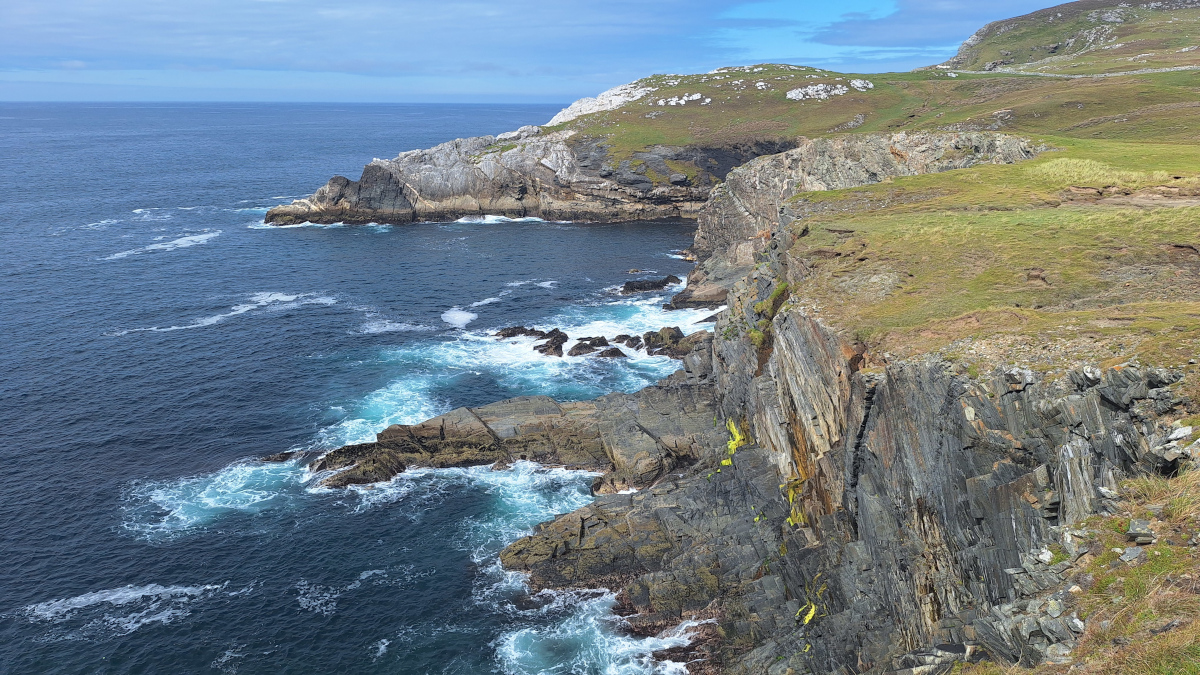
As told by Seosamh Ua Gallchobhair (Teelin, Co. Donegal)
In 2005, Seosamh Ua Gallchobhair of Teileann, Tír Chonaill, shared a story concerning the origin of the Gallagher name and a nickname associated with the clan.
The Rescue at Cuan na Long (794 A.D.)
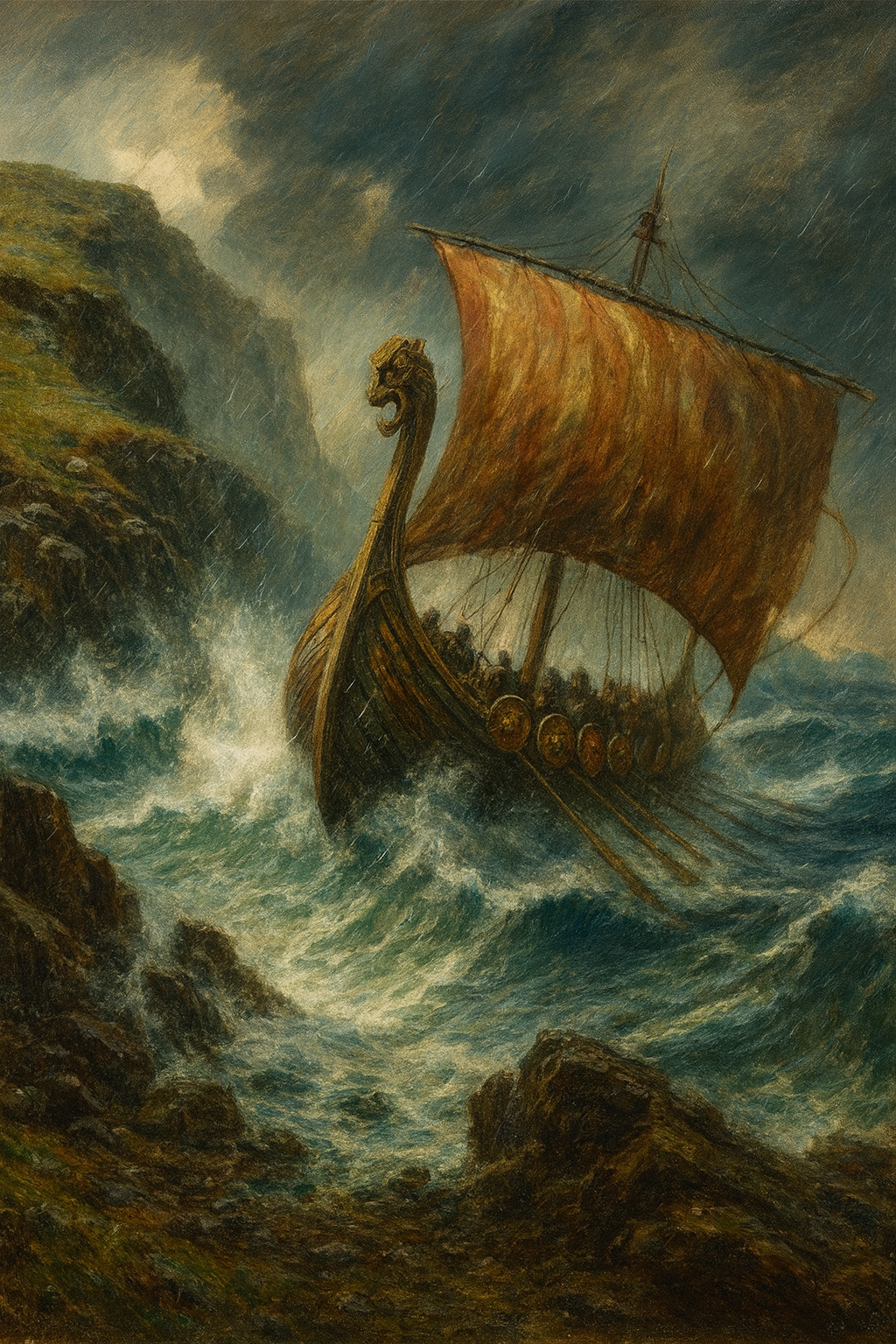
On a stormy day in 794 A.D., a man known as Gallchobhair—whose personal name has not survived—was at Cuan na Long (Shiphaven Bay, now commonly but incorrectly called Sheephaven Bay) with his companions.
His lineage was recorded as:
Gallchobhair
Mac Rurcan
Mac Ruaidhri
Mac Donnchadh
Mac Domhnall
Mac Ceallach
Mac Maelcoba
Mac Aedh
Mac Ainmireach
Mac Sedna
Mac Fergus Ceannfada
Mac Conall Gulban
Mac Niall Naoi n-Giallach
They spotted a Viking longboat drifting in the bay, its mast broken and its crew near death.
An Act of Hospitality
Gallchobhair and his men rescued the Viking crew and brought them to the hospice of the local monastery to recover.
Once the Vikings regained their strength, Gallchobhair arranged for their longboat to be repaired and fitted with a new mast.
During their stay, the Vikings observed:
- Herds of cattle and sheep
- Strings of horses
- The wealth of the monastery
- Gold and silver vessels
- Manuscripts in leather cases inlaid with gold
- Vast forests
When the longboat was finally refitted, laden with provisions, gifts (and perhaps some pilfered items!), the Vikings returned to the Northlands.
The Consequence (795 A.D.)
The story does not end happily.
When the Vikings returned home, they spoke of a welcoming and wealthy Ireland. The following year, 795 A.D., they or their friends returned—this time as raiders.
Thus began the Viking Era in Ireland.
According to one tradition, it was from this act of aid that the name Gallchobhair—
“The One Who Aided the Foreigner”—originated.
Remembered and embellished from an account in the Donegal Democrat in the 1960s.
The Gallagher Nickname
One nickname associated with the Gallaghers is:
“Gallchobhairí na g-Cipín Dóite”
or
“Gallchobhairí na g-Cipín Gualaigh”
Translation:
- Cipín = sticks
- Dóite = burned
- Gualach / Gualaigh = charcoal
How the Nickname Arose
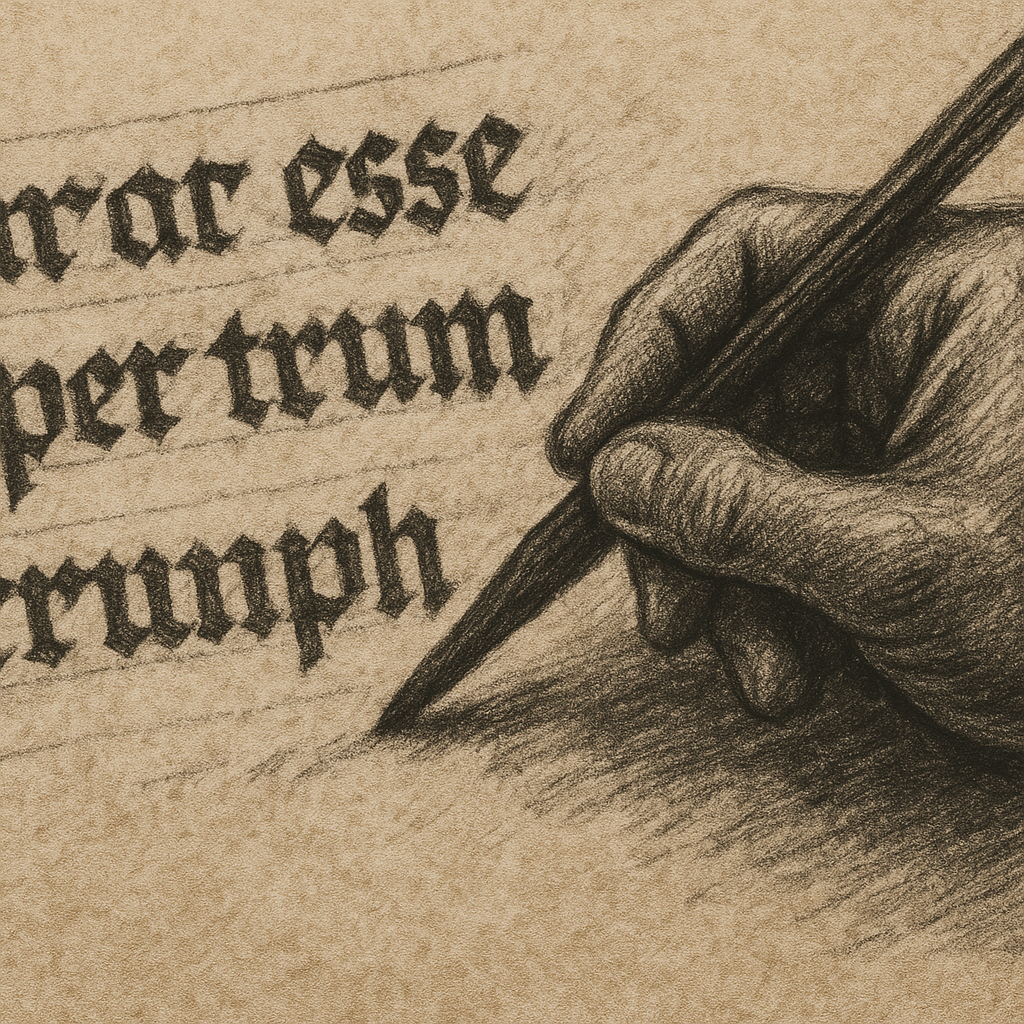
Several hundred years ago, when literacy was rare, the Gallaghers were known to be able to write—likely due to connections with the Church.
When people needed letters written, they came to the Gallaghers, who provided this service for a small consideration.
Their writing tools were pointed hardwood sticks. When dipped into a candle flame, the tips turned into charcoal, which was then used for writing.
For this reason, the nickname refers to “the Gallaghers of the charcoal sticks.”
Importantly, this was not a derogatory nickname, but one reflecting learning, skill, and literacy.
A Living Tradition
Charcoal sticks are still used by artists today.
“I sold them myself and I have a box of ‘Willow Charcoal’ as a Clan heirloom.”
The late Rab Matheson even made a model of one of these lamps for a cousin in Rinn na Cille.
- Willow charcoal sticks or traditional artist materials
- Search terms: willow charcoal art materials, artist charcoal sticks
Source and Attribution
Seosamh Ua Gallchobhair
Teileann, Tír Chonaill
As told by the late Mary Kate Hegarty Collins, N.T.
(First cousin of the author’s father; her mother was Maggie Gallagher.)
Illustrations: ChatGPT 2025